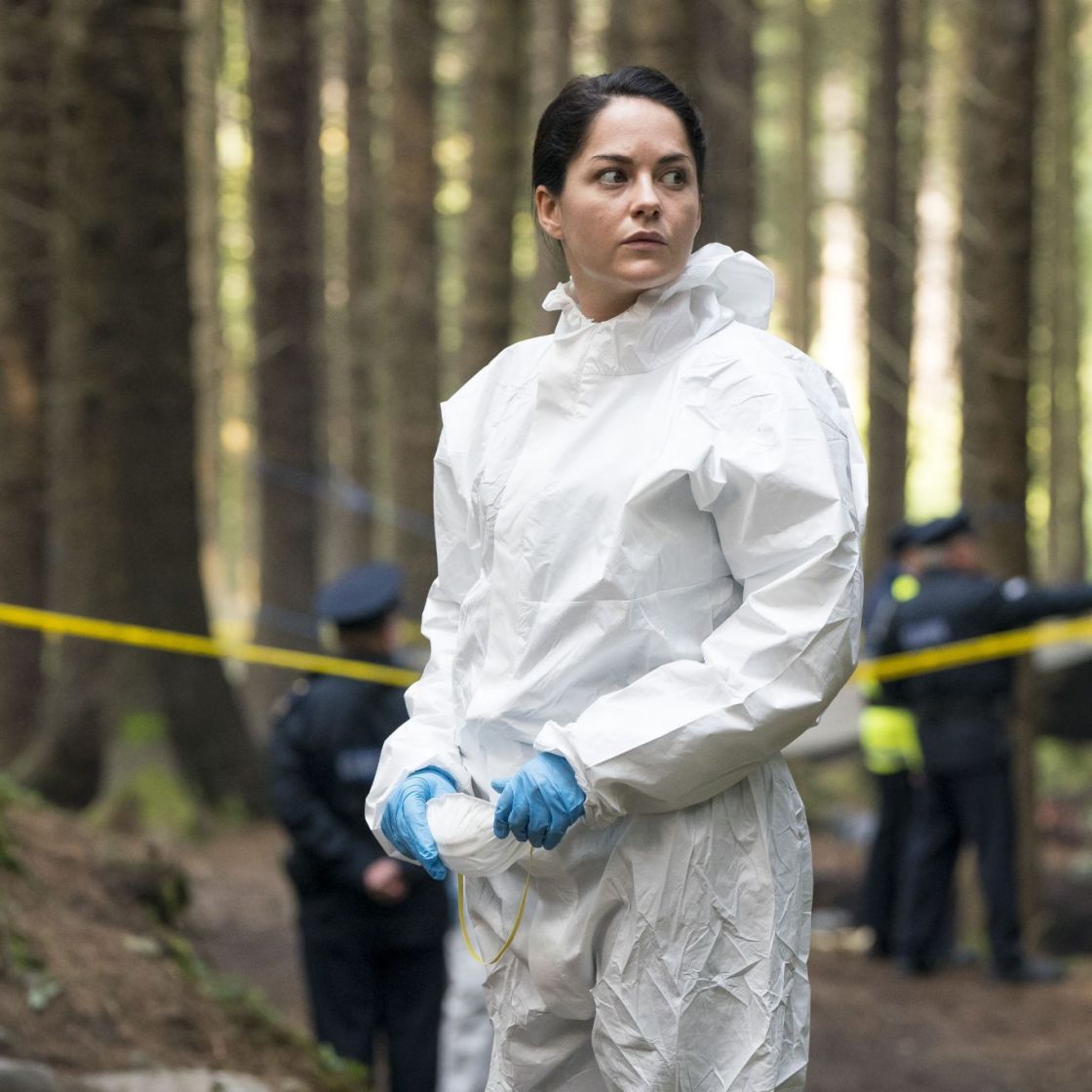
Dublin Murders Episode 1 Recap: Unraveling the Enigma of a Forest Crime
The highly anticipated Starz adaptation of Tana French's acclaimed novels, Dublin Murders, made a compelling debut on October 14th, immediately drawing viewers into a darkly atmospheric and deeply unsettling mystery. The premiere episode introduced us to the formidable detective duo, Rob Reilly (played by Ripper Street’s Killian Scott) and Cassie Maddox (portrayed by Penny Dreadful’s Sarah Greene), as they grappled with a chilling murder that seemed to echo a traumatic past. While the episode expertly set the stage, it left an unsettling trail of breadcrumbs and a multitude of unanswered questions, propelling viewers into a world of psychological tension and historical shadows.
The narrative opens with the shocking discovery of 13-year-old ballerina Katie Devlin's body, meticulously placed on an ancient stone altar deep within a secluded forest. This ritualistic tableau instantly signals that this is no ordinary crime. As Detectives Reilly and Maddox begin their investigation, they uncover layers of suspicion and the haunting possibility that Katie's death is intrinsically linked to a notorious, unsolved disappearance from the same woods decades prior. Let's delve into the crucial questions and burgeoning theories emerging from this gripping Dublin Murders Episode 1 Recap.
The Brutality of Katie's Death and the Altar's Ominous Significance
The details surrounding Katie Devlin's murder paint a grim picture of a horrific struggle and a calculated act. Forensic evidence suggests the young girl fought desperately for her life, evidenced by the blow to the back of her head and abrasions on her knees. Ultimately, she was overpowered and suffocated with a plastic bag. What makes this even more disturbing is the discovery that her body was stored in a cool, dry environment for several hours before being ceremoniously dumped on the ancient stone altar. This detail alone transforms the crime from a simple act of violence into something far more sinister, hinting at premeditation and ritualistic undertones.
The choice of the altar as the final resting place for Katie's body is perhaps the most significant and perplexing element of the crime. Altars, by their very nature, are places of sacrifice, worship, or communion. Their use in this context immediately suggests a motive rooted in something beyond conventional murder – perhaps an act of ritual, vengeance, or a dark symbolic message. If only we understood the full implications of this choice, we might be closer to understanding the killer's intent. The location itself adds another layer of profound importance: it's the exact spot from which two other young teenagers vanished without a trace back in 1985. This isn't a mere coincidence; it's a deliberate and chilling connection. The chilling memory of three children entering the forest that fateful day, with only one emerging, casts a long, dark shadow over Katie's death, strongly implying a deep-seated link between the past and the present.
Katie's Family: A Web of Suspicion and Unsettling Reactions
One of the most immediate sources of unease in the episode stems from the peculiar reactions of Katie's family. When informed of her daughter's death, Katie's mother, Sandra, initially expresses disbelief, clinging to the image of her daughter as "such a good girl" who "never gave us a moment’s trouble." Her initial calm, bordering on denial, raises eyebrows. Similarly, Katie's father, Jonathan, displays an unnervingly composed demeanor, recounting his last memory of Katie asleep and assuming she had gone training when she wasn't in her bed the next morning.
However, this veneer of composure quickly cracks. The younger Devlin sister, named Jessica, reacts with a visceral intensity, vomiting uncontrollably. Her subsequent mimicking of her mother's screams, coldly repeating "Katie’s dead" with chilling precision, is deeply unsettling. Meanwhile, the elder sister, Rosalind, (whose unusual attire quickly earned her the moniker "bunker sister" among viewers) trawls through Katie's room, dropping what appear to be loaded hints about the precise time of her sister's disappearance. This cacophony of atypical grief responses — denial, performative hysteria, and strange hints — immediately casts a pall of suspicion over the entire family. It's a stark reminder that in many real-world crime investigations, the perpetrator is often someone known to the victim. Many viewers on social media were quick to point fingers, with Katie's "creepy" father becoming a leading suspect due to his initial detachment. For a deeper dive into these family dynamics and their potential connection to the past, read our article: Dublin Murders Episode 1: Katie's Family, Altar, and 1985 Link Explored.
Yet, if a family member is responsible, the elaborate nature of the crime — the ritualistic altar, the careful body disposal, and especially the deliberate echo of the 1985 disappearances — presents a conundrum. Would a killer from within the family go to such extreme lengths to create a scene that so perfectly mirrors a cold case, potentially drawing attention to a long-dormant mystery? This elaborate staging seems designed to mislead, suggesting a killer who is both cunning and deeply invested in the historical context of the location.
Detective Rob Reilly's Secret: The Unveiling of Adam
Perhaps the most jaw-dropping revelation of the premiere episode is the shocking truth about Detective Rob Reilly himself. As the investigation progresses, it becomes starkly clear that Rob is not just investigating a new murder linked to the 1985 case; he is the sole survivor of that horrific incident. Rob Reilly is, in fact, Adam, the boy who mysteriously emerged from the forest decades ago, unable to recall what happened to his two friends or even to himself. The subtle clue of his English accent, contrasting with his Irish colleagues, initially seems like a minor character detail, but it's quickly revealed to be a direct consequence of his past trauma and subsequent adoption and relocation.
This revelation profoundly reshapes the entire narrative. Rob isn't merely a detached investigator; he is an active participant in the very mystery he's trying to solve. His personal connection to the crime scene, his suppressed memories, and his internal conflict instantly make him a deeply compelling, albeit dangerously compromised, protagonist. The ethical implications of a detective investigating his own traumatic past are immense, raising questions about his objectivity, his ability to separate his personal demons from his professional duties, and the potential for his repressed memories to resurface, either as a help or a hindrance. This twist sets up a fascinating exploration of memory, identity, and the lingering psychological impact of trauma. The blurring lines between Rob's past and present become a central tension, promising a complex and emotionally charged journey for the character. For more on this pivotal twist, explore our related article: Dublin Murders Episode 1 Recap: Is Detective Rob Reilly Adam?
Crafting a Compelling Mystery: The Power of Source Material
The success of Dublin Murders, even in its opening episode, is deeply rooted in the strength of its source material: Tana French's internationally acclaimed "Dublin Murder Squad" novels, specifically In The Woods and The Likeness. French's books are renowned for their intricate plotting, psychological depth, and richly drawn characters, providing an exceptionally robust foundation for a television adaptation. Just as a master chef thrives with premium ingredients, a strong literary backbone empowers a production team to create a truly immersive and satisfying viewing experience.
Starz's adaptation leverages these "fresh ingredients" skillfully, establishing its central mystery with a tantalizing blend of suspense and character development. The show's atmosphere is palpable, dripping with an unsettling dread that permeates every scene. The pacing of Episode 1 is deliberate, allowing questions to simmer and tensions to build, rather than rushing to provide easy answers. The casting of Killian Scott and Sarah Greene as the central detective duo is particularly inspired; their chemistry and nuanced performances immediately draw viewers into their complex professional and personal dynamic. This careful construction ensures that even with a multitude of unanswered questions, the audience remains utterly captivated and hungry for more.
Conclusion
The premiere of Dublin Murders delivered an explosive start, masterfully introducing a multi-layered mystery that is as much about psychological trauma and buried secrets as it is about solving a crime. From the horrific details of Katie Devlin's death on an ancient altar to the profoundly unsettling reactions of her family and the game-changing revelation of Rob Reilly's true identity, Episode 1 ensured that viewers were left with a torrent of unanswered questions and compelling theories. The stage is set for a dark and intricate journey, promising to delve deep into the human psyche and the enduring shadows of the past. As the investigation unfolds, one thing is certain: the woods of Knocknaree hold secrets far more sinister than anyone can imagine, and the truth will undoubtedly come at a heavy cost for everyone involved.