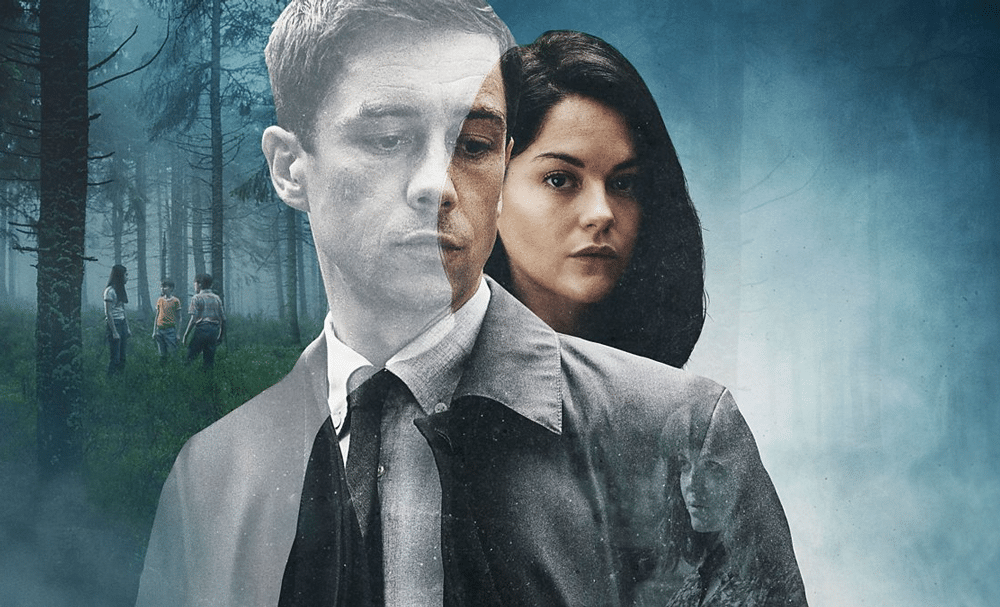
Dublin Murders Episode 1 Recap: Unraveling Katie's Mysterious Death
The highly anticipated psychological crime drama,
Dublin Murders, burst onto our screens, immediately plunging viewers into a chilling mystery that intertwines past trauma with present-day horror. Starring Killian Scott as the haunted Detective Rob Reilly and Sarah Greene as his sharp-witted partner, Detective Cassie Maddox, the series wastes no time in establishing a dark, atmospheric tone, drawing us into the ominous depths of an ancient Irish forest. This
Dublin Murders Episode 1 recap meticulously dissects the premiere, focusing on the shocking discovery that sets the entire season in motion: the brutal murder of a young ballerina named Katie Devlin. The first episode, adapted from Tana French’s acclaimed "In The Woods" and "The Likeness" novels by the brilliant screenwriter Sarah Phelps, masterfully laid out a labyrinth of clues, suspicions, and unanswered questions, leaving an indelible mark on its audience and prompting intense speculation about the identity of Katie's killer and the sinister forces at play.
Unveiling the Horrific Details of Katie's Murder
The central tragedy of the premiere is undeniably the mysterious death of 13-year-old Katie Devlin. Her body is discovered by detectives Rob Reilly and Cassie Maddox, gruesomely positioned on an ancient stone altar deep within the woods, setting an immediate tone of ritualistic dread. The initial forensic findings paint a horrifying picture: Katie struggled fiercely against her attacker, evidenced by a significant blow to the back of her head and painful abrasions on her knees. Ultimately, she was overpowered and suffocated with a plastic bag – a chilling detail suggesting a perpetrator who wanted to ensure silence and control.
Further investigation reveals that Katie's body wasn't simply dumped; it appears to have been stored in a cool, dry place for several hours before its macabre presentation on the altar. This suggests a calculated, deliberate act, rather than a spontaneous crime. The killer took time and care, not only in the method of murder but also in the disposal and staging of the body. This meticulousness elevates the crime beyond a simple act of violence, implying a deeper, possibly symbolic, motive behind her untimely demise. For the investigators, these forensic details are not just facts; they are whispers from the victim, hinting at a killer who is both brutal and disturbingly methodical.
The Enigmatic Altar and Its Ancient Echoes
Perhaps the most perplexing and significant aspect of Katie’s murder scene is the choice of location: an ancient stone altar nestled deep within the woods. This isn't just a random dumping ground; it's a site laden with historical and perhaps mystical significance. The use of an altar immediately suggests ritualistic undertones, leading detectives to consider cult activity, ancient practices, or a killer with a twisted sense of symbolism. However, the true chilling implication of this location lies in its direct link to a harrowing cold case from 1985. This exact spot, decades prior, was the scene of a notorious disappearance where three children ventured into the forest, but only one ever emerged.
This chilling coincidence is anything but accidental. It creates an undeniable temporal bridge between Katie’s present-day murder and a traumatic event from the past that has haunted the local community for over two decades. The altar, therefore, becomes not just a crime scene but a nexus of dark history, a silent witness to recurring horrors. Its deliberate selection by Katie's killer implies a profound connection to the 1985 incident, either as a direct recreation, a symbolic homage, or a warning. Understanding the significance of this altar is paramount to unraveling the entire mystery, offering a potential key to the killer's motive and identity. Could it be a message? A challenge? Or a reliving of past traumas? The answer to these questions lies buried within the woods, just like the secrets of the 1985 disappearances. For more on the connections, read our
Dublin Murders Episode 1 Theories: Altar, Family Secrets & 1985 Link.
A Family Under Scrutiny: The Strange Case of the Devlin Household
The initial interactions with Katie’s family immediately raise a flurry of red flags, turning the Devlin household into an instant hub of suspicion. Upon learning of her daughter's death, Katie's mother delivers an oddly detached statement: "She was such a good girl. She never gave us a moment’s trouble." While seemingly innocuous, her tone, coupled with the father’s initially calm demeanor – suggesting Katie often left for training without notice – paints a picture of disquieting composure rather than raw grief.
However, this veneer quickly shatters. The younger sister’s sudden, dramatic vomiting, followed by her eerily cold mimicry of the mother's eventual screams ("Katie’s dead," she recites), is profoundly unsettling. Even more suspicious is the elder sister, who wanders around Katie’s room, dropping loaded hints about the exact time of her sister's disappearance. The sudden shift from an unnatural calm to chaotic pandemonium within the family is a masterclass in psychological manipulation by the show's creators, feeding the audience's natural inclination to suspect those closest to the victim.
Social media reactions during the premiere highlighted these bizarre family dynamics, with many viewers immediately pointing fingers at Katie's "creepy" and potentially abusive father. While the show presents a red herring of religious garb and ritualistic murder, the grim reality is that a significant percentage of child murders are committed by someone known to the victim. This stark fact, combined with the Devlins' deeply unsettling reactions, makes them prime suspects in the eyes of both the audience and the detectives. The questions linger: Is their strange behavior a sign of guilt, or simply a deeply dysfunctional family grappling with unimaginable tragedy in their own peculiar way? The unsettling performance from Katie’s family sets a disturbing precedent for the intricate web of deceit and hidden motives that the series promises to untangle.
Shadows of the Past: The Lingering Mystery of 1985
The most compelling and haunting layer of mystery introduced in the premiere of
Dublin Murders is undoubtedly the unsolved case from 1985. Decades before Katie Devlin’s murder, three children ventured into the same ominous woods, playing what they believed was an innocent game. However, only one of them ever came out. The two others vanished without a trace, leaving behind a chilling local legend and an enduring cold case that has plagued the community. This 1985 disappearance is not merely a historical footnote; it is woven directly into the fabric of the current investigation, threatening to unravel the present through its inescapable ties to the past.
Crucially, this decades-old tragedy isn't just a background detail for Detective Rob Reilly; it's a traumatic personal experience. Rob was the sole child who emerged from the woods that fateful day in 1985, seemingly unharmed but psychologically scarred. His memory of the event is fragmented, a black hole of trauma that he has suppressed for years, even changing his name to escape his past. The discovery of Katie’s body on the very spot where his childhood friends disappeared forces him to confront his buried memories, threatening to compromise his professional objectivity and personal sanity.
The glaring parallels between Katie's murder and the 1985 cold case – the same woods, the same altar, the same age group of victims – cannot be ignored. Is this a sophisticated copycat crime, a killer recreating a past horror? Or is it the resurfacing of the original perpetrator, who has lain dormant for over two decades, only to return and inflict new terror? The idea that the killer from 1985 could be back, or that Katie's murder is directly linked to the unresolved trauma of Rob's past, injects a deeply personal and psychological dimension into the police procedural. The lingering questions from 1985 are no longer just historical curiosities; they are vital clues, casting long, menacing shadows over the present, challenging Rob to face his deepest fears to solve Katie’s case.
First Impressions and Lingering Questions
The premiere of
Dublin Murders, masterfully brought to life from Tana French's rich source material by screenwriter Sarah Phelps, delivers a powerful and unsettling introduction to a world shrouded in mystery and psychological tension. The initial
Dublin Murders Episode 1 recap highlights the immediate impact of Katie Devlin's horrific murder, the perplexing significance of the ancient altar, the deeply suspicious behavior of her family, and the ominous specter of the 1985 cold case that intimately connects to Detective Rob Reilly. The episode skillfully establishes a complex narrative web, where every character seems to harbor secrets and every clue leads to more questions. As Rob and Cassie delve deeper into Katie's death, they are not just solving a murder; they are unearthing generations of darkness that lie beneath the seemingly tranquil surface of suburban Dublin. The premiere sets an incredibly high bar, promising a captivating and often disturbing journey into the heart of human memory, trauma, and the enduring power of unresolved mysteries.