Dublin Murders Episode 1 Theories: Unraveling the Altar, Family Secrets, and the 1985 Link
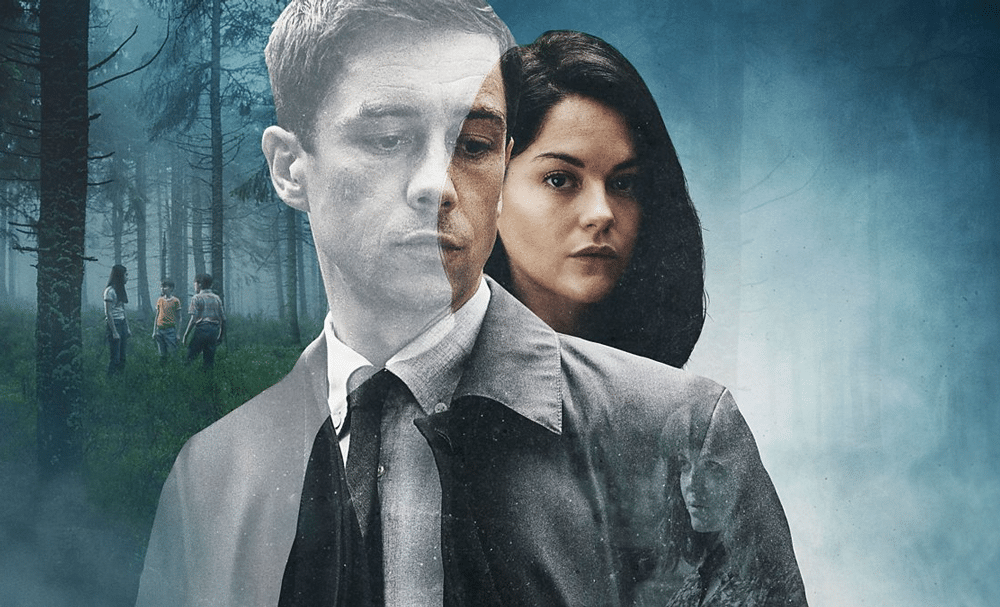
From the moment the chilling opening credits rolled, BBC One's Dublin Murders, starring Killian Scott as Detective Rob Reilly and Sarah Greene as Detective Cassie Maddox, plunged viewers into a world steeped in ancient mystery and modern-day horror. Premiering to widespread anticipation, the first episode immediately established a dark, atmospheric tone, centered on the brutal murder of a young ballerina. This Dublin Murders Episode 1 Recap: Unraveling Katie's Mysterious Death left audiences with more questions than answers, igniting a fervent debate among armchair detectives. The perplexing crime, the unsettling dynamics of the victim's family, and a haunting historical parallel from 1985 laid a complex foundation for the series, prompting a deep dive into the most compelling theories emerging from the premiere.
The Gruesome Discovery: Katie's Murder and Forensic Clues
The central tragedy of Dublin Murders Episode 1 revolves around the horrific death of 13-year-old Katie Devlin. Her body, found meticulously placed on an ancient stone altar in the heart of the woods, immediately signals a crime far beyond a simple act of violence. Detective Rob Reilly and Detective Cassie Maddox quickly piece together the grim details of her final moments, revealing a struggle indicative of a desperate fight for survival. Forensic analysis points to a blow to the back of her head and abrasions on her knees, suggesting Katie fought back fiercely against her assailant. Ultimately, she was overpowered and suffocated with a plastic bag – a disturbing detail that implies a level of premeditation or controlled rage rather than a spontaneous act.
Adding another layer of unsettling complexity, investigators determine that Katie's body was stored somewhere "cool and dry" for several hours before being moved and ritually dumped on the altar. This detail is crucial for several reasons. Firstly, it indicates a deliberate effort to delay discovery or perhaps clean the scene, suggesting a killer who is not only methodical but potentially calculating. Secondly, the act of storing the body before its ritualistic placement on the altar points towards a carefully executed plan. It elevates the crime from a mere murder to something more symbolic, more deliberate, and undeniably chilling. The killer was not just taking a life; they were orchestrating a macabre scene, hinting at a deeper, possibly ritualistic, motive that the detectives must painstakingly uncover.
The Ancient Altar and the Lingering Shadow of 1985
Perhaps the most significant and perplexing element introduced in Dublin Murders Episode 1 is the ancient stone altar itself and its profound connection to a chilling cold case from 1985. The very choice of such a site for Katie’s body is laden with symbolic weight, suggesting ritualistic overtones that immediately differentiate this murder from typical criminal investigations. An altar implies sacrifice, ceremony, and perhaps even a twisted form of reverence. This isn't just a dumping ground; it's a statement.
However, the altar's true significance deepens when its location is revealed to be the exact spot where, back in 1985, three children entered the forest, but only one ever emerged. This historical parallel is no mere coincidence; it is undoubtedly the linchpin connecting Katie's murder to a much older, darker narrative. The overwhelming theory here is that Katie's death is either a recreation of the 1985 incident, a continuation of it, or a direct consequence of whatever transpired decades ago. Is the same killer from 1985 now active again after lying dormant for over two decades? Or is Katie's murder a copycat crime, perhaps by someone obsessed with the original disappearance? The sheer audacity of using the same location suggests a message, a challenge, or a deeply personal connection to the past. The weight of this unsolved mystery hangs heavy over the present investigation, implying that understanding the truth of 1985 is paramount to solving Katie's murder. This link not only broadens the scope of the investigation but also imbues it with a sense of historical dread, suggesting that the woods themselves hold ancient, malevolent secrets waiting to be unearthed. The series, based on Tana French's acclaimed novel "In The Woods," masterfully uses this historical context to build a compelling and unsettling narrative.
The Kent Family: A Web of Grief, Guilt, or Deception?
Beyond the ritualistic elements and historical links, the immediate aftermath of Katie's death casts a dark spotlight on her own family, the Kents. Their reactions, as depicted in Dublin Murders Episode 1, are anything but typical for grieving parents, sparking immediate suspicion among viewers and detectives alike. Katie’s mother, initially calm and collected, describes her daughter as "such a good girl," "never gave us a moment's trouble" – a detached, almost rehearsed response that feels jarringly out of place. Similarly, Katie’s father's initial account of checking on her and assuming she had gone "training" when she wasn’t in her bed, despite the grim reality, raises eyebrows. This seemingly indifferent calm quickly shatters into pandemonium, but the initial coldness leaves a lasting impression.
The younger sister’s disturbing mimicry of her mother's screams – a cold, almost analytical repetition of "Katie's dead" – coupled with the "bunker sister’s" (as many viewers dubbed her) cryptic hints about the time of Katie’s disappearance, paints a picture of a family deeply dysfunctional, possibly even complicit in some hidden truth. Social media, as the reference context notes, was ablaze with theories pointing fingers squarely at the Kent family, particularly the father, who is subtly portrayed as "abusive and creepy." It's a classic crime drama trope: the closer the killer, the more devastating the reveal. The question then becomes: is the family’s peculiar behavior genuine grief expressed abnormally, or are they actively concealing a horrific secret? While the ritualistic altar and the 1985 cold case might seem like a grand red herring to divert attention, the grim reality of murder often points to those closest to the victim. The profound disconnect in their reactions suggests layers of unspoken tension and potential guilt within the family, making them prime suspects in the ongoing Who Killed Katie? Dublin Murders Episode 1 Recap & Suspects.
Interweaving Mysteries: Ritual, Past Trauma, and Present Peril
The brilliance of Dublin Murders Episode 1 lies in its masterful weaving of disparate, yet undeniably connected, narrative threads. The ritualistic nature of Katie’s murder, underscored by the ancient altar, seems to point towards a motive rooted in cult, folklore, or dark ceremony. However, the unsettling behavior of the Kent family suggests a crime potentially born from domestic turmoil, abuse, or hidden resentments. The most tantalizing and terrifying link is, of course, the 1985 disappearance, hinting at a cycle of violence or a long-dormant killer resurfacing. How do these elements truly connect?
One compelling theory suggests that while the ritualistic staging might be a deliberate attempt to mislead investigators, the actual killer could still be someone known to Katie, perhaps even within her own family. The 1985 link, then, could be a copycat element designed to deflect suspicion or even to taunt someone personally connected to that earlier tragedy. Alternatively, the killer from 1985 could indeed be active again, and the unsettling family dynamics might be a consequence of living under the shadow of past trauma or an awareness of an ongoing threat. Perhaps the 1985 survivor, or someone else deeply scarred by the event, is orchestrating these new events, or is being targeted. The show, adapted by the talented Sarah Phelps from Tana French’s intricate novels, excels at this psychological layering, forcing viewers to question every motive and every character's true intentions. The interplay between ancient beliefs, unresolved historical trauma, and the dark undercurrents of modern family life promises a detective story that is as much about the human psyche as it is about solving a crime.
Dublin Murders Episode 1 has expertly set the stage for a deeply complex and psychologically rich crime drama. From the forensic details of Katie Devlin's brutal murder to the chilling significance of the altar and the deeply unsettling dynamics of her family, every element sparks intense theorizing. However, it is the haunting shadow of the 1985 cold case that truly elevates this mystery, suggesting that present-day horrors are inextricably linked to past traumas. As Detectives Reilly and Maddox delve deeper, they are not just solving a murder; they are unearthing generations of secrets buried beneath the ancient, indifferent woods of Dublin.